
Article Plan: Gendered Voices Feminist Visions 8th Edition PDF Free
This article details the 8th edition’s content, exploring classic and contemporary feminist readings, queer theory, STEM, technology, and decolonial perspectives.
“Gendered Voices, Feminist Visions” stands as a cornerstone text in feminist scholarship, offering a comprehensive anthology of influential writings. This eighth edition continues that legacy, presenting a carefully curated selection of both foundational and cutting-edge perspectives on gender, power, and social justice. The book’s enduring appeal lies in its ability to bridge historical context with contemporary concerns, fostering critical thinking about the complexities of gendered experiences.
It serves as an essential resource for students and scholars alike, providing a platform for engaging with diverse feminist theories and methodologies. The text’s scope extends beyond traditional boundaries, incorporating insights from queer theory, decolonial studies, and critical analyses of technology and mythology, making it a truly interdisciplinary exploration.
II. Overview of the 8th Edition
The 8th edition of “Gendered Voices, Feminist Visions” builds upon previous iterations with updated selections and a refined organization. It maintains a balance between classic texts that shaped feminist thought and contemporary pieces addressing current social issues. New additions reflect evolving scholarship, particularly in areas like intersectionality and queer studies, ensuring the anthology remains relevant and dynamic.
This edition features expanded coverage of technology’s impact on gender dynamics and explores feminist perspectives on mythology. The inclusion of diverse voices and perspectives strengthens the text’s commitment to inclusivity and critical self-reflection, offering a nuanced understanding of gender’s multifaceted nature.

III. Key Themes and Concepts
“Gendered Voices, Feminist Visions” centers around core feminist concepts, including the historical relationship between gender and humanism. The text meticulously explains terminology crucial to gender research, providing a solid foundation for understanding complex theories. Intersectionality is a prominent theme, examining how various social categorizations—race, class, sexuality—create overlapping systems of discrimination.
Further exploration delves into foundational feminist theories, offering a comprehensive overview of their development and application. The anthology also investigates governance, dependency, and sexuality, analyzing power dynamics and their impact on gender equality.
III.1. Intersectionality in the 8th Edition
The 8th edition of “Gendered Voices, Feminist Visions” significantly emphasizes intersectionality, moving beyond single-axis analyses of oppression. It showcases how gender intersects with other identities like race, class, and sexuality, creating unique experiences of discrimination. This edition highlights the complexities of lived realities, acknowledging that gender is not experienced in isolation.
By incorporating diverse voices and perspectives, the text demonstrates how power structures operate on multiple levels. It challenges readers to consider the interconnectedness of social inequalities and the need for inclusive feminist approaches.
III.2. Gender and Humanism: Historical Context
The text meticulously examines the historical relationship between gender and humanism, revealing how traditional humanist thought often excluded or marginalized women. It traces the development of gender roles and societal expectations throughout history, demonstrating how these constructs have shaped power dynamics.
The 8th edition unpacks how the “universal” claims of humanism were frequently based on male experiences, effectively rendering women as “other.” This historical analysis provides crucial context for understanding contemporary feminist critiques and the ongoing struggle for gender equality. It sets the stage for exploring core feminist theories.
III.3. Core Feminist Theories Explored
The 8th edition delves into a comprehensive overview of core feminist theories, providing students with a robust understanding of the intellectual foundations of the movement. Key theoretical frameworks, such as liberal feminism, radical feminism, socialist feminism, and poststructuralist feminism, are thoroughly examined.
The text clarifies the nuances and debates within each school of thought, highlighting their strengths and limitations. It also explores how these theories have evolved over time and continue to inform feminist scholarship and activism. This detailed exploration equips readers to critically analyze gender dynamics and advocate for social change.
IV. Authors and Contributors
“Gendered Voices, Feminist Visions” benefits from a diverse range of scholarly contributions. While specific author details for the 8th edition require further pinpointing, the series consistently features leading voices in feminist theory and gender studies. Contributors often include academics specializing in areas like queer theory, critical race theory, and postcolonial studies.
The anthology’s strength lies in its ability to synthesize perspectives from established scholars and emerging researchers. This collaborative approach ensures a multifaceted exploration of gender, power, and social justice. Expect contributions reflecting interdisciplinary expertise, enriching the text’s analytical depth.
V. Content Breakdown: Classic Readings
The “Classic Readings” section of “Gendered Voices, Feminist Visions” forms a foundational element. It presents seminal texts that have shaped feminist thought, offering historical context for contemporary debates. These readings likely encompass works by foundational figures who challenged traditional gender roles and power structures.

Expect to encounter texts exploring the social construction of gender, the impact of patriarchy, and the experiences of women across diverse cultures. These selections provide a crucial understanding of the historical trajectory of feminist movements and their enduring relevance. They are vital for grasping current feminist discourse.
V.1. Significant Classic Texts Included
While a definitive list requires examining the 8th edition directly, it’s reasonable to anticipate inclusions of foundational feminist works. These may encompass texts by Simone de Beauvoir, exploring existentialist perspectives on womanhood, and foundational writings from the first and second-wave feminist movements.
Expect selections addressing women’s suffrage, reproductive rights, and challenges to patriarchal structures. Key theoretical pieces concerning the social construction of gender and the critique of essentialism are also probable inclusions. These texts collectively represent the historical bedrock of feminist scholarship, providing essential context for understanding contemporary issues.
V.2. Historical Impact of These Readings
The classic texts within Gendered Voices, Feminist Visions have profoundly shaped academic discourse and social movements. They catalyzed critical conversations about power, inequality, and representation, influencing fields beyond gender studies – including sociology, literature, and political science.

These readings fueled second-wave feminism’s advancements in legal rights and reproductive freedom. They provided intellectual frameworks for challenging traditional gender roles and advocating for social justice. Their continued relevance lies in their ability to illuminate the enduring structures of oppression and inspire ongoing activism, fostering a legacy of critical thought and social change.

VI. Content Breakdown: Contemporary Readings
The 8th edition of Gendered Voices, Feminist Visions significantly expands its coverage of modern feminist perspectives. It incorporates scholarship addressing current social issues like intersectionality, global feminisms, and the impact of technology on gender dynamics.
These contemporary selections offer nuanced analyses of evolving power structures and emerging challenges. They explore topics such as transgender rights, environmental justice, and the complexities of digital activism. By including diverse voices and perspectives, the text ensures relevance and encourages critical engagement with the ongoing evolution of feminist thought and practice.
VI.1. Modern Feminist Perspectives Represented
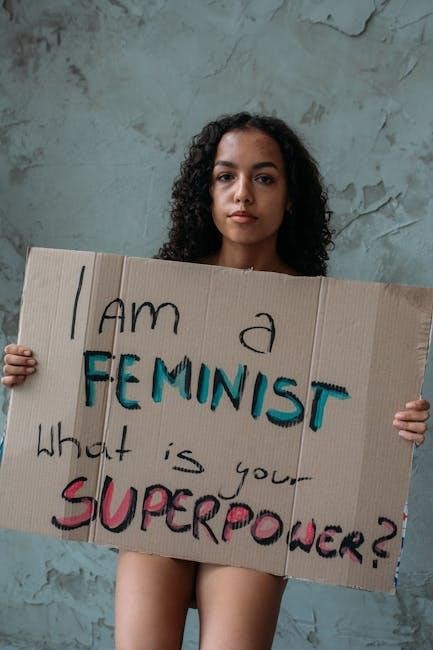
The 8th edition showcases a broad spectrum of modern feminist thought, moving beyond traditional frameworks. It features contributions from scholars engaged with queer theory, decolonial studies, and critical race theory, enriching the discourse.
Represented are perspectives addressing the intersection of gender with other social categories like race, class, and sexuality. The text includes analyses of contemporary issues such as reproductive rights, gender-based violence, and the challenges faced by marginalized communities. This diverse representation fosters a more inclusive and comprehensive understanding of feminist principles and their application in the 21st century.
VI.2. Relevance to Current Social Issues
The readings within the 8th edition directly address pressing contemporary social issues, providing critical frameworks for understanding and challenging systemic inequalities. Discussions on governance, dependency, and sexuality offer insights into power dynamics shaping modern society.
The text’s exploration of technology and mythology reveals how these cultural forces reinforce or disrupt gender norms. Furthermore, the inclusion of perspectives on STEM fields highlights ongoing struggles for gender equality in academia and professional settings. This relevance extends to debates surrounding reproductive rights, violence against women, and the pursuit of social justice globally.
VII. Queer Theory and its Integration
The 8th edition significantly integrates queer theory, moving beyond traditional gender binaries and exploring the complexities of sexual identity and expression. The collection, particularly through works like “Mehr(wert) queer,” examines the critical and enabling potential of queer perspectives within visual culture, art, and gender politics.
This integration isn’t merely additive; it fundamentally challenges established feminist frameworks. Queer politics and gender studies are presented as intertwined, offering new avenues for analyzing power structures and advocating for social change. The text fosters a deeper understanding of intersectionality, acknowledging the diverse experiences within LGBTQ+ communities.
VII.1. “Mehr(wert) queer” and Visual Culture
The anthology prominently features the collection “Mehr(wert) queer,” a crucial resource for understanding the intersection of queer theory, visual culture, art, and gender politics. This work delves into how visual representations both reflect and shape societal understandings of gender and sexuality.
“Mehr(wert) queer” critically assesses the potential of queer perspectives to disrupt conventional norms and foster more inclusive artistic and cultural landscapes. It examines how visual media can be utilized to challenge power dynamics and promote marginalized voices. The text encourages readers to analyze images and artistic expressions through a queer lens, uncovering hidden meanings and challenging assumptions.
VII.2. Queer Politics and Gender Studies
The 8th edition integrates queer politics deeply within the broader framework of gender studies, moving beyond traditional binary understandings of gender and sexuality. This integration acknowledges the significant contributions of queer theory in challenging heteronormative assumptions and expanding the scope of feminist inquiry.
The text explores how queer political movements have influenced academic discourse and social activism, advocating for LGBTQ+ rights and challenging systemic inequalities. It examines the interplay between power, identity, and representation, highlighting the importance of intersectionality in understanding the complexities of gender and sexuality. This approach fosters a more nuanced and inclusive understanding of gender dynamics.
VIII. Gender and STEM Fields (MINT)
The 8th edition addresses the persistent underrepresentation of women and gender minorities in Science, Technology, Engineering, and Mathematics (STEM) fields, often referred to as MINT in German-speaking contexts. It critically examines the systemic barriers and biases that contribute to this disparity, including societal expectations, implicit biases in education, and workplace discrimination.
The text explores strategies for promoting gender equality in STEM, such as mentorship programs, inclusive curriculum development, and policies that support work-life balance. It highlights the importance of fostering a more inclusive and equitable STEM environment to unlock the full potential of all individuals, regardless of gender.
IX. Feminist Perspectives on Technology and Mythology
This edition delves into the intersection of feminist thought with both technology and mythology, revealing how these areas are not neutral but are deeply shaped by gendered power dynamics. It analyzes how technology can perpetuate existing inequalities or be used as a tool for feminist activism and social change.
Furthermore, the text examines how traditional mythologies often reinforce patriarchal structures and gender stereotypes. A key focus is on deconstructing these myths and exploring alternative narratives that challenge conventional understandings of gender roles and power, particularly through the lens of cultural technomyths.
X. Governance, Dependency, and Sexuality
The 8th edition critically examines the complex relationships between governance structures, dependency relations, and the construction of sexuality, revealing how power operates within these interconnected domains. It explores how political systems and societal norms influence and regulate sexual expression and identity.
This analysis extends to understanding how dependency – whether economic, social, or emotional – can be leveraged to control and marginalize individuals based on their gender and sexuality. The text investigates how these dynamics intersect, shaping experiences of inequality and resistance, and the symposium focuses on these very issues.
XI. Accessing the 8th Edition PDF
Locating a PDF of “Gendered Voices, Feminist Visions, 8th Edition” requires careful consideration of legality and ethical sourcing. While convenient, unauthorized downloads infringe on copyright laws and undermine the authors’ work.
Legitimate access often involves purchasing the digital textbook through official academic channels, such as the publisher’s website or authorized online bookstores. University libraries frequently provide access to digital resources for enrolled students. Be wary of websites offering “free” PDFs, as these often harbor malware or violate copyright. Prioritize legal and ethical acquisition methods to support scholarly work.
XI.1. Legitimate Sources for PDF Access
Several reliable avenues exist for legally accessing the “Gendered Voices, Feminist Visions, 8th Edition” PDF. Primary sources include the publisher’s official website, offering direct purchase options for digital versions. Major online booksellers, like Amazon and Barnes & Noble, also frequently stock the e-book format.
Crucially, university and college libraries often subscribe to digital textbook platforms, granting students access through their institutional credentials. Checking your library’s online resources is a cost-effective and legal method. Avoid unofficial websites promising free downloads, as these pose security risks and copyright violations.
XI.2. Avoiding Copyright Infringement
Respecting copyright is paramount when seeking the “Gendered Voices, Feminist Visions, 8th Edition” PDF. Downloading from unauthorized sources constitutes a violation of intellectual property law, carrying potential legal consequences. Utilizing illegally obtained PDFs supports unethical practices and undermines the authors’ and publishers’ rights.
Prioritize legitimate access methods, such as purchasing the e-book or utilizing library resources. Sharing purchased PDFs with individuals who haven’t acquired their own copy is also a form of infringement. Supporting ethical distribution ensures the continued production of valuable academic texts like this one.
XII. Critical Reception and Reviews
Academic discourse surrounding “Gendered Voices, Feminist Visions, 8th Edition” highlights its comprehensive scope and continued relevance. Reviews often commend the text’s balanced inclusion of both foundational and contemporary feminist scholarship. The integration of queer theory, particularly as explored in works like “Mehr(wert) queer,” receives notable attention for broadening perspectives.
Some critiques may focus on the breadth of topics covered, suggesting a potential lack of in-depth analysis in certain areas. However, the anthology’s strength lies in its ability to provide a broad overview of feminist thought, stimulating further research and critical engagement.
XIII. The Role of Feminist Literature in Academia
“Gendered Voices, Feminist Visions” plays a crucial role in academic settings, serving as a cornerstone text for gender studies, sociology, and related disciplines. Its anthology format introduces students to a diverse range of feminist thinkers and theoretical frameworks.
The inclusion of both classic and contemporary readings fosters a historical understanding of feminist movements and their evolution. Furthermore, the text’s exploration of intersectionality, queer theory, and decolonial perspectives encourages critical analysis of power dynamics and social inequalities within academia and beyond. It’s a vital resource for scholarly debate.
XIV. Comparative Analysis with Previous Editions

The 8th edition of “Gendered Voices, Feminist Visions” builds upon prior editions by incorporating more recent scholarship and expanding its coverage of emerging feminist concerns. Updates reflect evolving understandings of intersectionality and queer theory, evidenced by discussions within “Mehr(wert) queer.”
Compared to earlier versions, this edition demonstrates a greater emphasis on decolonial perspectives and the intersection of technology with feminist thought. The inclusion of contemporary readings ensures relevance to current social issues, while maintaining the foundational classic texts. This evolution strengthens its academic value.
XV. Utilizing the Text in Educational Settings
“Gendered Voices, Feminist Visions” serves as a robust resource for gender studies, sociology, and interdisciplinary courses. Its balanced collection of classic and contemporary readings facilitates critical discussions on gender, power, and social justice.
Instructors can leverage the text to explore complex themes like intersectionality, queer theory (“Mehr(wert) queer”), and feminist perspectives on STEM (MINT) fields. The diverse content allows for adaptable assignments, encouraging students to analyze historical context and contemporary relevance. The text’s breadth supports varied pedagogical approaches, fostering engaged learning.
XVI. Further Research and Related Texts
Expanding beyond “Gendered Voices,” students can explore Michael Meyer’s work on English and American Literature for contextual understanding. Research into governance, dependency, and sexuality, as highlighted in related symposiums, offers deeper insights.
Investigating queer theory through texts like “Mehr(wert) queer” – focusing on visual culture and gender politics – provides a critical lens. Further exploration of feminist perspectives on technology and mythology, alongside decolonial approaches, enriches understanding. Examining literature on gender equality in STEM (MINT) fields complements the text’s scope, fostering comprehensive research.
XVII. The Importance of Gender Research Terminology
“Gendered Voices” emphasizes a precise understanding of gender research terminology, crucial for navigating complex feminist theories and analyses. The 8th edition meticulously explains core concepts, building a foundation for critical engagement.

Familiarity with terms related to intersectionality, queer theory (as explored in “Mehr(wert) queer”), and decolonial perspectives is essential. Understanding the historical context of gender and humanism, alongside terminology surrounding governance and dependency, enhances comprehension. A robust vocabulary allows for nuanced discussions of power dynamics, technology, and mythology within feminist discourse.
XVIII. Feminist Visions and Decolonial Perspectives
The 8th edition of “Gendered Voices” increasingly integrates decolonial perspectives into feminist analysis, recognizing the limitations of Western-centric frameworks. This intersection acknowledges how colonial histories shape gendered experiences globally.
Scholars explore cultural technomyths through a feminist and decolonial lens, challenging dominant narratives. The text examines how power structures, stemming from colonialism, intersect with gender inequality. This approach broadens the scope of feminist inquiry, moving beyond traditional focuses to address systemic injustices and promote more inclusive visions for liberation.
XIX. Circulation and Materiality in Feminist Discourse

“Gendered Voices, Feminist Visions” considers how feminist ideas are disseminated and embodied in the world, examining the materiality of discourse. This includes analyzing the physical forms through which feminist thought circulates – books, articles, digital media, and embodied practices.
The text explores governance practices, dependency relations, and the impact of circulation on gender and sexuality. It investigates how material conditions shape feminist activism and scholarship. Understanding these dynamics is crucial for analyzing the power structures that influence feminist movements and their ability to effect change.
XX. Gender and Power Dynamics
“Gendered Voices, Feminist Visions” fundamentally analyzes the intricate relationship between gender and power, dissecting how societal structures perpetuate inequalities. The 8th edition delves into how power operates through various systems – governance, technology, and cultural norms – impacting individuals based on their gender identity.
It examines dependency relations and how these reinforce existing power imbalances. The text critically assesses how feminist perspectives challenge these dynamics, advocating for agency and liberation. Understanding these power structures is essential for fostering a more equitable and just society, as highlighted within the collection’s diverse readings.
XXI. Conclusion: The Enduring Relevance of Gendered Voices
“Gendered Voices, Feminist Visions” remains profoundly relevant in contemporary discourse, offering critical insights into ongoing struggles for gender equality. The 8th edition’s comprehensive collection of classic and modern readings continues to inspire and inform feminist scholarship and activism.
Its exploration of intersectionality, queer theory, and decolonial perspectives ensures a nuanced understanding of power dynamics. The text’s enduring value lies in its ability to challenge established norms and promote social justice. It serves as a vital resource for students, researchers, and anyone seeking to understand the complexities of gender in a changing world.